
The Rocking Airplane toy plan will allow you to create a very beautiful and lasting gift for your child of 3-4 years or a little older.
It will allow him/her to exercise imagination and consume inexhaustible energy. Rocking gives pleasure to people throughout life. The first baby's crib is a rocking baby cradle. Later, children love rocking toys and swings, and we all enjoy rocking chairs. The earliest known rocking toys that had a semi-circular base date from the 17th century. The most famous of these wooden toys is the rocking horse which King Charles the First of England owned when he was a child. Through the mid 19th century, Queen Victoria ordered a rocking horse for herself, and after that these toys were becoming increasingly popular, and began to appear in homes and nurseries more often.
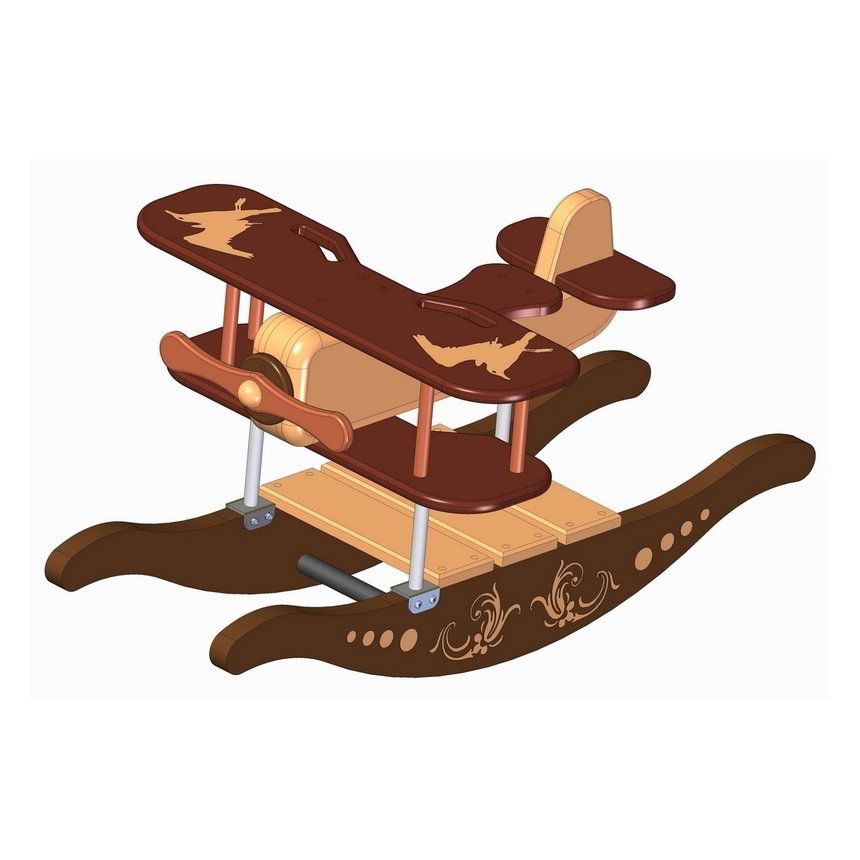
The rocking airplane toy measures: 1283.5mm (50.53'') long, 840mm (33.07'') wide, and 617mm (24.29'') high.
On the other hand, boys, who are more inclined to technology than girls, almost always experience a period in their childhood when they dream of becoming pilots. A Rocking Airplane toy is an ideal combination of meeting children's needs for movement and fulfillment of a boyhood fantasy.
This Rocking Airplane kids’ toy is designed in a retro style, like the biplanes of early 20th century. The spinning propeller increases the realistic aspect of the toy. The upper pair of wings has openings for a child to hold on to them firmly, while the child's legs will be supported by the lower pair of wings or the platform below the airplane, so that the child is comfortably and safely placed while he swings back and forth. The tail of the airplane also serves as a safety support for the child's back. The Rockers have a slight curve to ensure swinging at a safe angle, and at the ends, they have the stoppers which control the swinging angle.
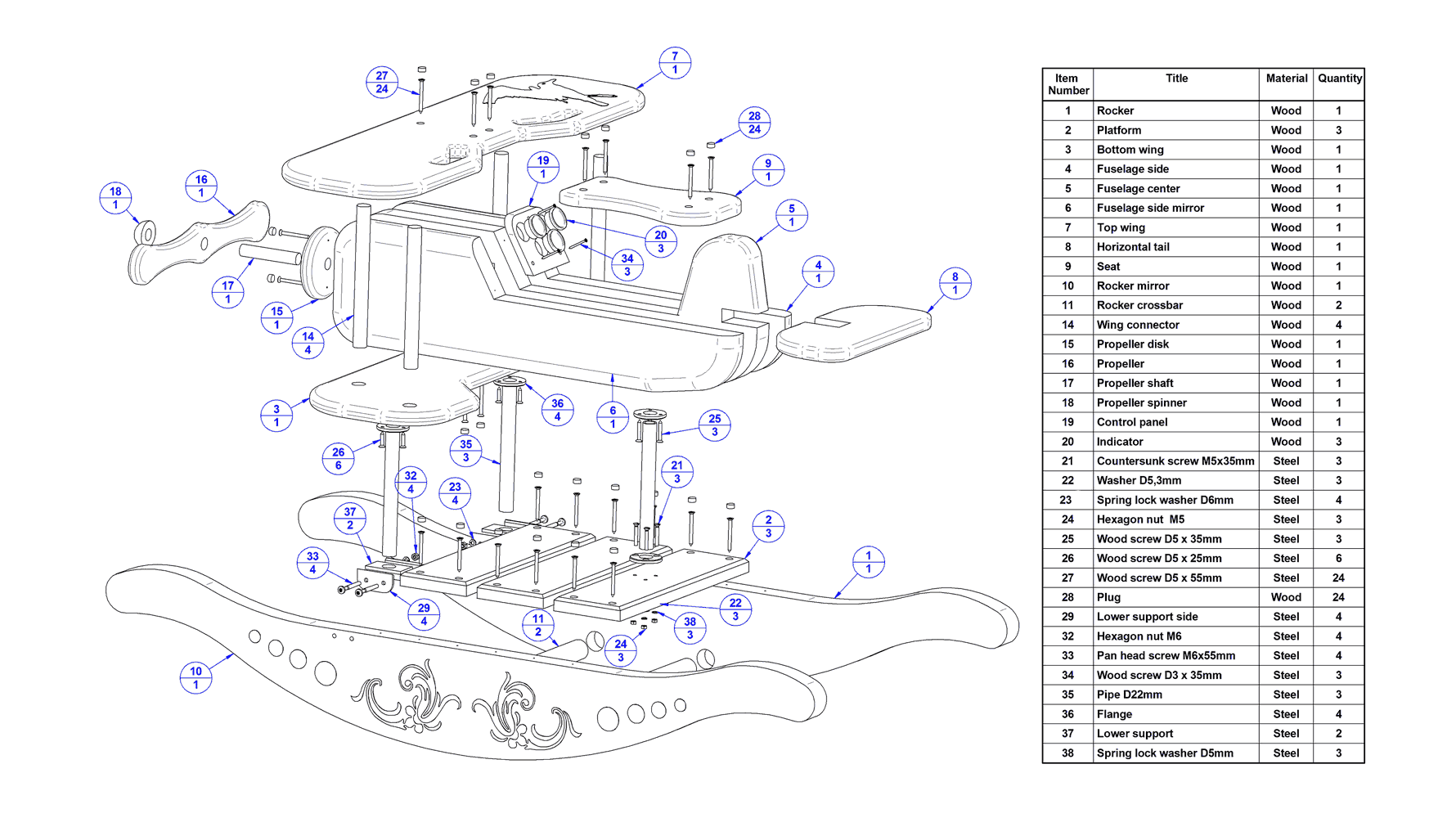
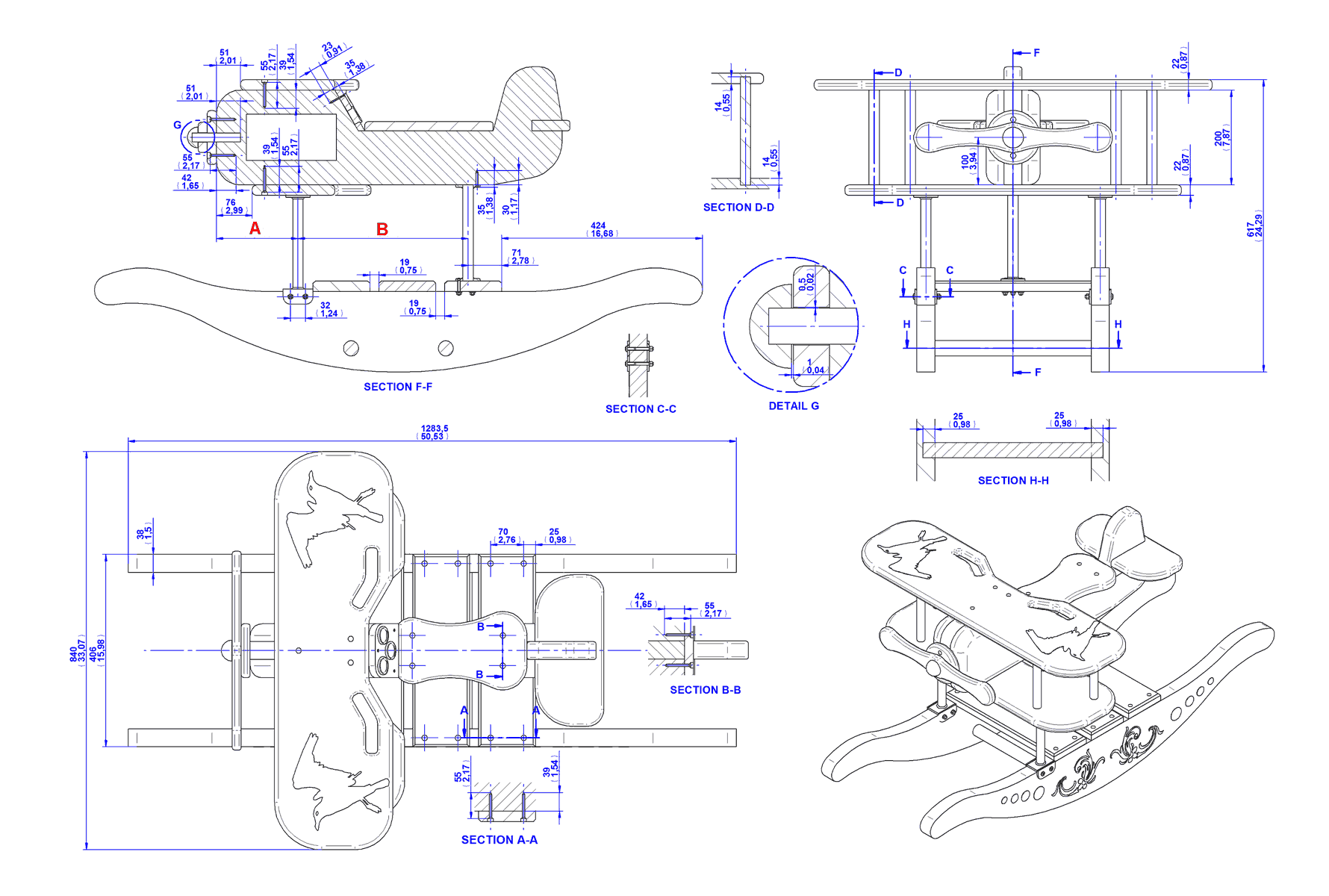
During the construction of the wooden Rocking Airplane toy, all parts should be made of solid hardwood, except for the propeller. Since the propeller is movable, it should be made of the lightest possible wood. A great attention should be paid to fixing the propeller well, so that it would not fall off during the child's play. The metal pipes (connecting the airplane with the platform) should be made of lightweight metals such as aluminum or its alloys. For greater comfort, the seat can be covered with a cushion (or padded), which must be fixed to the underside of the seat, so that it would not slip while the child is sitting on it. To increase the child's safety, you can cover the platform with some slip-resistant material (rubber or cloth) to reduce the possibility of the child slipping. If your house space is limited, you can shorten the wings a little. It will not reduce the beauty of your wooden Rocking Airplane toy at all. As with all wooden toys, it is important to pay special attention to wood finishing, in order to make it completely smooth, and to prevent splinters in little fingers. You can paint the flat surfaces of the wings, while the rockers are an ideal place for chip carving. While playing, the child, as always, must be supervised by an adult, who have to help and hold the child during climbing up and down a Rocking Airplane.
When you make it well, this Rocking Airplane toy will last forever and it will be a family heirloom toy.